Speaking Without Words A Child’s Silence, A Healer’s Heart Finding Hope in the Quiet Clay, Color, and Healing Trauma Beyond Words: A Story of Resilience
Sometimes, silence speaks volumes. It’s a pediatrician’s truth, certainly – I spend my days translating those silences for parents, trying to understand what...
Sometimes, silence speaks volumes. It’s a pediatrician’s truth, certainly – I spend my days translating those silences for parents, trying to understand what's behind the averted gaze or the tight-lipped quiet. But recently, working with a young boy who’d experienced… well, let’s just say he’d seen too much for someone so small, it struck me with an intensity I hadn’t felt before: how utterly profound that silence can be. He arrived at our clinic displaced from his home in a war-torn region, clinging to a worn teddy bear and barely uttering a word. The initial assessments were standard – weight, height, reflexes. But what we *really* needed to assess was something far more delicate, something you can’t measure with a stethoscope or a thermometer.
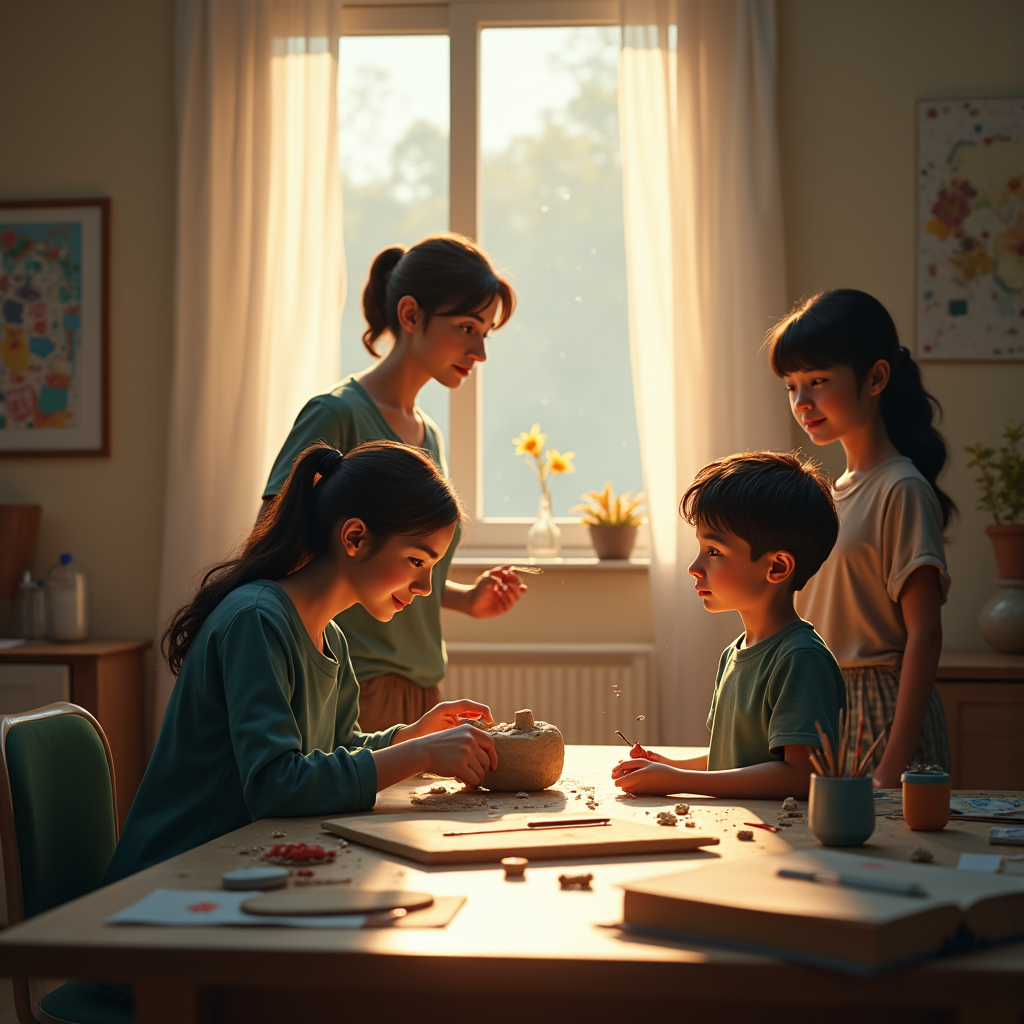
The team felt it immediately. This wasn't just shyness; this was the absolute shutdown of a spirit overwhelmed. He wouldn’t respond to questions, refused toys offered by our nurses, and flinched at sudden movements. We knew talking wasn’t going to work. Forcing conversation would only deepen the wall he'd built around himself. So we stopped trying. Instead, one of our colleagues, an incredibly perceptive therapist, brought in a box filled with clay, paints, brushes, and some simple carving tools. She simply placed it on a table near him and sat nearby, quietly reading a book. No pressure. Just presence.
It took days, maybe weeks, but eventually, he reached out. A tentative finger poked at the clay. Then another. Soon, his small hands were shaping it – not into anything recognizable at first, just lumps and forms that seemed to mirror his own confusion and pain. I remember thinking about my own children; how when they were little, a block of clay could become a spaceship, a castle, an entire world contained in their imagination. This boy’s clay was different. It felt… heavy.
He started creating images too – swirling colors that looked like storms, dark lines scratching across the paper with unsettling intensity. There wasn't narrative there yet, no easy story to untangle. But within those swirls and scratches, I saw glimpses of a landscape: broken buildings, frightened faces, loss. It was heartbreaking, but it was also a beginning. A crack in that protective wall of silence. My niece Elara started pottery classes last year. She's eleven and full of that particular brand of ferocious creativity only pre-teens can possess. Seeing her lose herself in the process – the concentration, the messy joy – reminded me of what we were trying to unlock for this boy.
The therapist worked with him not by probing or pushing, but by reflecting. "I see you’re using a lot of blue," she might say gently. Or, “That shape looks like it might be…” allowing him to complete the thought himself, if he chose. It wasn’t about interpreting his creations; it was about validating them as expressions of his experience. It's such a subtle shift – from *telling* someone what you think they mean, to offering space for *them* to define it. It reminded me of how I try to be with my own patients sometimes – truly listening to their parents’ anxieties, not rushing in with solutions but just… absorbing the worry and offering understanding.
Slowly, something shifted. The storms on paper began to include tiny figures—stick-like representations of people, tentatively reaching out. The clay started forming shapes that resembled houses, trees, even animals – fragile attempts at rebuilding a world lost. He didn't talk much, but his eyes… his eyes began to hold a spark. A flicker of hope replacing the profound sadness we’d initially seen. He even started bringing small gifts he’d made for the nurses and therapists – a wobbly clay bird, a painted stone with a single smiling face.
It's been nearly two years since he first walked through our clinic doors. He still has moments of quiet, of retreat, but now those silences are different. They’re not born of trauma; they’re spaces for processing, for remembering, for finding strength. We work with him on narrative reconstruction—helping him piece together his story, not to erase the pain, but to reclaim a sense of ownership over it. It's important to acknowledge that scars remain; they are part of who he is. But he also knows now that those scars don’t define him.
The most powerful lesson I take from this experience isn’t about therapy techniques or diagnostic criteria. It's about the resilience of children, their innate capacity for healing even after unimaginable loss. And it reinforces something I already knew but often forget amidst the demands of daily practice: sometimes, all a child needs is someone to simply *be* there, offering a quiet space and tools to speak when words fail—even if those tools are just clay, paint, and a patient heart.