The Dance of Parenting: A Two-Way Influence
Sometimes, I feel like I'm sitting in room 214, watching a complicated play unfold, and the script keeps changing. Not because anyone’s deliberately altering...

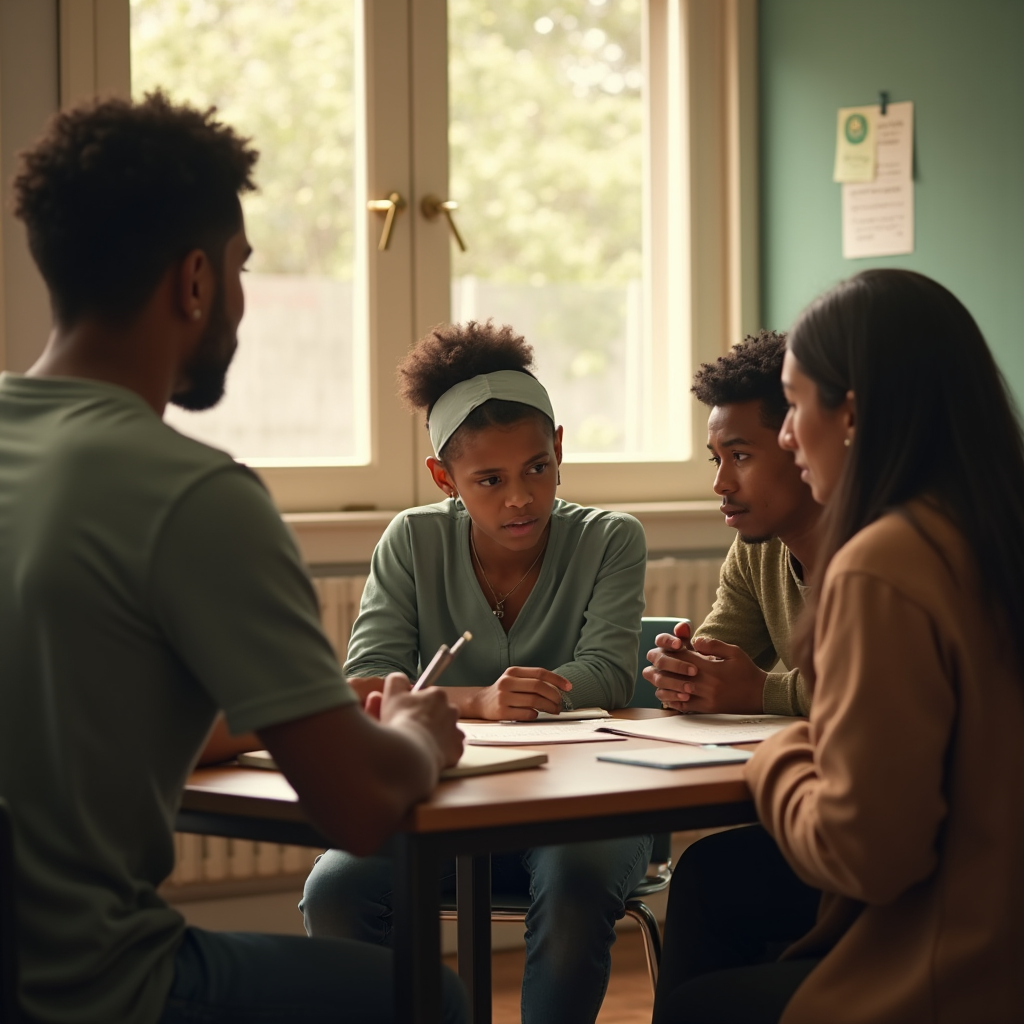
Sometimes, I feel like I'm sitting in room 214, watching a complicated play unfold, and the script keeps changing. Not because anyone’s deliberately altering it, but because… well, because that's just how plays are. We talk a lot about parenting. My mom, she was a big believer in the idea that it all started with you. How you shaped them, how you talked to them, the boundaries you set. And there’s truth in that, of course. A lot of truth.
But watching these kids, seeing the things they say, the way they react to the smallest shifts in the room… it makes you wonder about the direction of that influence. It’s not always a one-way street. It feels more like a tug-of-war, sometimes gentle, sometimes fierce. We expect parents to be the steady hand, the calm in the storm, but what happens when the storm starts influencing the hand itself?
There’s this assumption that kids are blank slates, shaped entirely by their environment. My dad, he used to say, "You can mold them into anything." It’s a nice thought, reassuring, especially when you’re feeling overwhelmed. But I've seen kids who, despite the best efforts of their parents – genuinely good people, trying their hardest – still have these moments, these outbursts, these… resistances. And those parents? They start to change, too. Not fundamentally, not overnight. But subtly.
One kid, Malik, he’s got a temper. A real one. Not malicious, not intentional, just… intense. The first few weeks, his mom was really strict, trying to shut it down, to control it. More yelling, more punishments. And Malik? He just got louder, more defiant. It was like pouring gasoline on a fire. Then, a shift. I noticed his mom started responding differently. More… calm. More trying to understand what was *underneath* the outburst. Less reaction, more… listening.
It wasn't a magical fix, of course. There were still tough days. But the dynamic changed. Malik started to mirror her calmness, to try to regulate himself a little. And it wasn't just him. I’ve seen it with other kids, too. A parent's frustration can escalate a situation, but so can a parent's willingness to pause, to breathe, to really *hear* what the child is saying, even if it's just a frustrated scream. That willingness, that shift in approach, it’s often a response *to* the child’s behavior, not the other way around.
It reminds me of something my grandma used to say: "Sometimes, the strongest roots bend to protect the tree." It’s not about abandoning boundaries or giving in to bad behavior. It’s about recognizing that parenting isn't a linear process, it’s a dance. A complex, sometimes messy, but ultimately beautiful dance where both partners are influencing each other. Maybe we need to be teaching parents that instead of, "Do this, and this will happen," we need to be saying, "Pay attention. Truly pay attention. To what your child is telling you, even when it’s hard to hear."
We spend so much time, I think, trying to find the "right" way to parent. The perfect strategy, the foolproof technique. But maybe the most important thing we can teach parents is to be flexible, to be observant, to be willing to adjust their approach based on the individual child in front of them. To be willing to admit that sometimes, the child is teaching *them* something, too.
It’s a humbling thought, really. It means acknowledging that we don't have all the answers, that parenting is a lifelong learning process, and that sometimes, the best thing we can do is simply listen, and be willing to change our steps along the way. It's a truth I'm starting to see more and more, sitting here in room 214.