The Lost Sound of Reading
Okay. It started with Leo. Leo was seven, maybe eight, and he just… couldn’t. Not really. He *saw* the letters, you know? He’d point at “cat” and say, “Cat!”...

Okay.
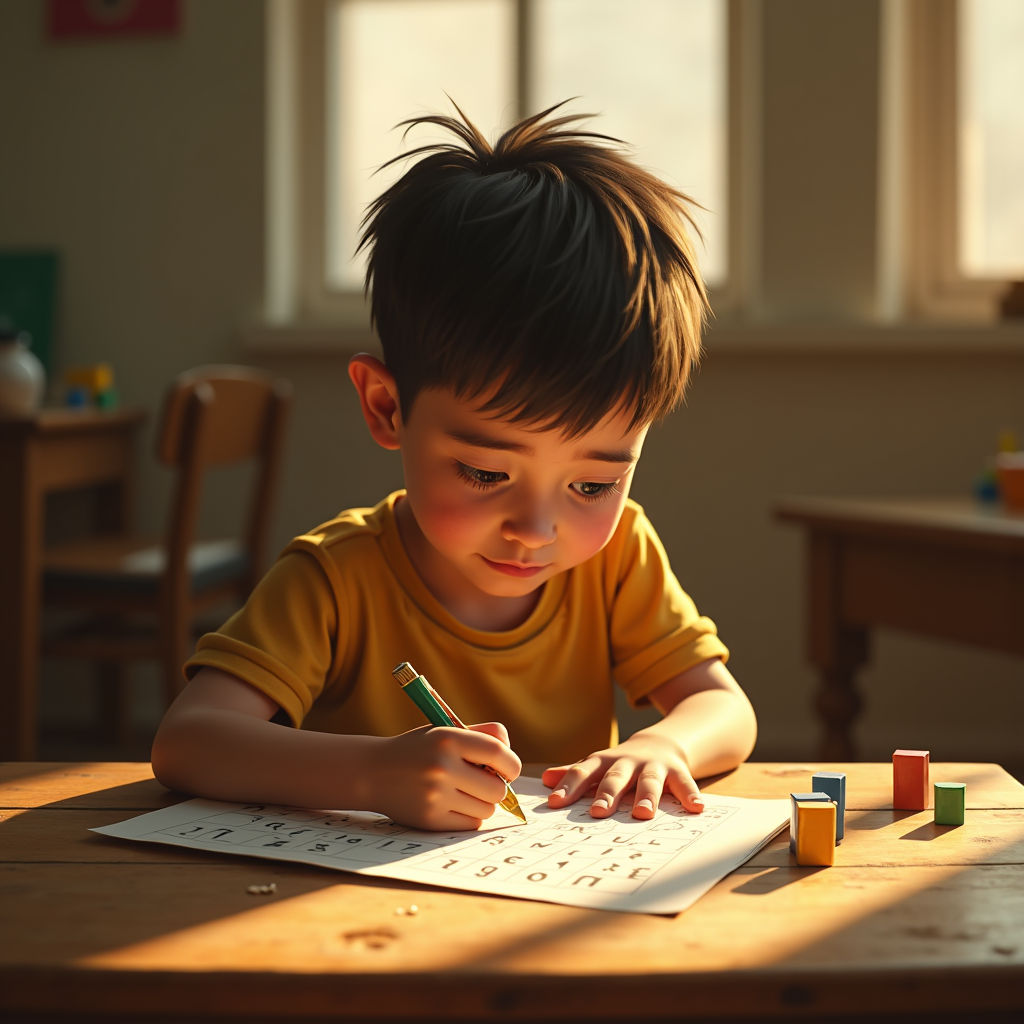
It started with Leo. Leo was seven, maybe eight, and he just… couldn’t. Not really. He *saw* the letters, you know? He’d point at “cat” and say, “Cat!” with this earnest little frown. But the *sound*? The way it felt in your mouth when you said it? That was gone. Vanished. Like it had been replaced by a bunch of little squiggles that he was supposed to decode. And you see that a lot, you know? Kids come in, full of energy, full of the way things *sound* - the rhythm of their voices, the way they bounce around when they’re excited - and then suddenly, they’re staring at a page and it’s just… noise.
I don’t mean to sound like a scientist, but the way the brain works, especially with kids, it’s like… it’s building pathways. Pathways for sound, pathways for movement, pathways for everything. And reading? Reading is like building a whole new set of pathways, but it needs to be connected to the old ones. If you don’t build that connection, if you don’t make the sound and the symbol talk to each other, it just sits there. A beautiful, frustrating, silent puzzle.
And it’s not just about the letters themselves, is it? It’s about the *expectation*. You’re telling a kid, “This squiggle *means* this sound. It *represents* this word.” And the kid’s brain is saying, “Hold on. I hear it. I feel it. It’s not just… this.” There's this weird push and pull, this struggle between what your ears tell you and what the page tells you. It's like teaching a kid that sometimes, you have to listen to the quietest voice.
I’ve spent a lot of time in Room 214 watching kids wrestle with this. Some of them get it quick, like it’s some kind of magic. They start sounding out words before you can even say "phonics." But others… they just keep staring. And you realize it’s not about being smart or not smart. It’s about how you’re teaching them to *hear*.
It's funny, though, how much of this comes down to patience. You can’t just tell a kid, “Okay, *now* say ‘dog.’” You gotta let them *hear* the “d,” the “o,” the “g” – all those sounds hanging there in the air. You gotta help them feel the difference between “big” and “bit,” between “see” and “sea.” It’s like building a bridge, one sound at a time.
And you know, sometimes they get it. Suddenly, they'll just *snap* and they’ll be reading. And you’ll see this little flicker of understanding in their eyes, like a lightbulb going on. And it’s not just about reading; it’s about making connections. It’s about realizing that the world isn’t just a bunch of random sounds and pictures, but a connected, understandable thing.
I think a lot of what I do here—and maybe what we all do—is about helping kids find those connections. About helping them build those pathways. It’s a slow process, and there are going to be moments where it feels like you’re just banging your head against a wall. But then you see that flicker, that little moment of understanding, and you remember why you’re doing it.
It’s about giving them the tools to make their own sense of the world. And that, I think, is the most important thing of all. It’s about teaching them how to listen, truly listen, to the stories that are all around them.