
The Power of a Simple Question
“Okay.” It’s funny, isn’t it? How a kid can just… *get* something. Like, I was talking to little Mateo yesterday, third grade, after recess. He’d been arguin...

“Okay.”
It’s funny, isn’t it? How a kid can just… *get* something. Like, I was talking to little Mateo yesterday, third grade, after recess. He’d been arguing with Leo about who got the last purple crayon, a full-blown territorial dispute. You know the kind. And I just, plain and simple, said, "Mateo, what if Leo *needed* that crayon for his drawing?"
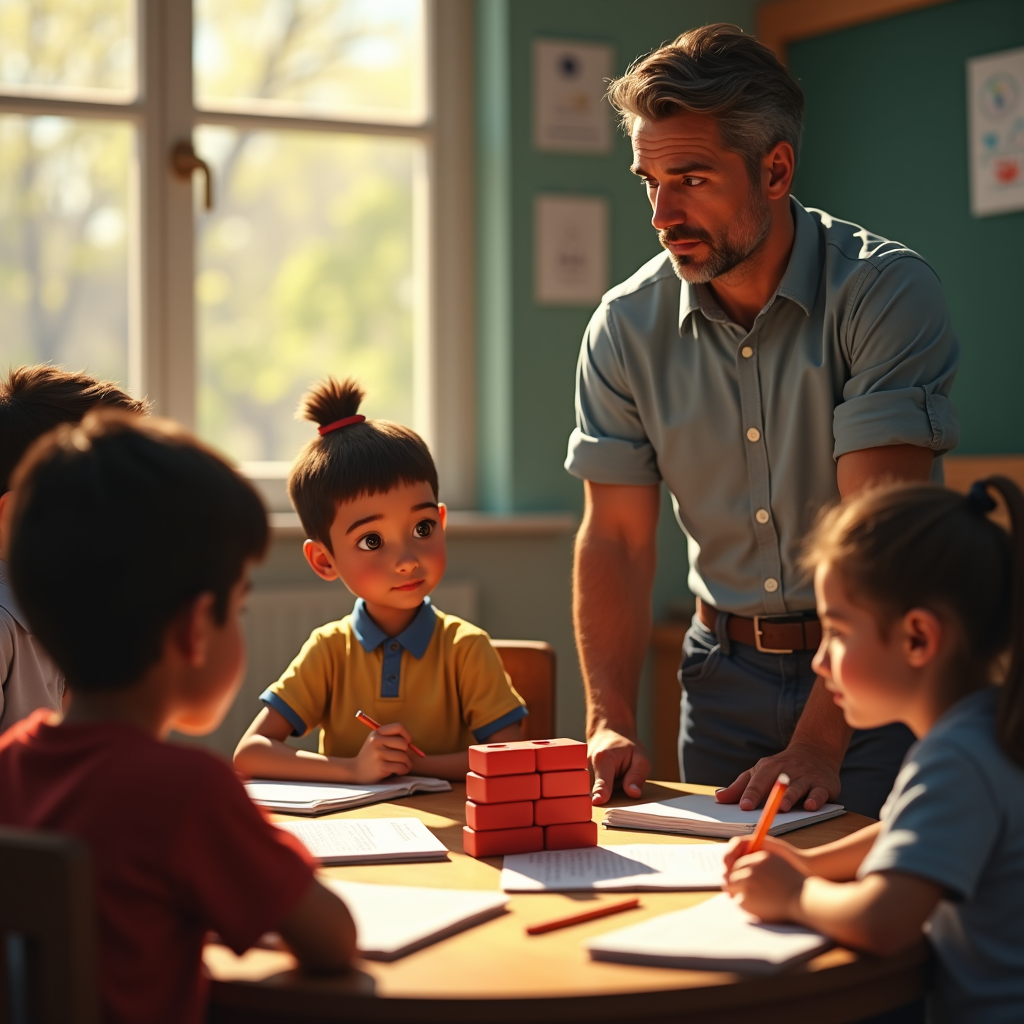
It wasn’t some grand lesson about empathy or resource management. It wasn't a lecture about sharing. Just… that question. And he stopped. He actually *looked* at Leo. It’s like the idea just landed right there in his head, a little brick, solid and unexpected.
I’ve been thinking about this a lot lately, because I spend my days with a bunch of these kids, figuring out how they see the world. They don't need fancy explanations, usually. They just need a little nudge in the right direction, a single question that forces them to consider a different angle. It’s not about “teaching” them, not really. It’s about creating space for those little bricks to land.
It reminds me of this thing I learned, not from some book or workshop, but from Mrs. Rodriguez, my neighbor down the street. She used to tell me, "Don’t tell them *what* to think, tell them *why*." That’s key, I think. If you just tell them “be kind,” it’s just a word. But if you ask, “Why do you think it would make Maria feel sad if you said that?” you’re getting somewhere. You're building that brick.
I was helping a group of fifth graders with a project about community helpers. They were struggling to understand why firefighters risk their lives, and I kept offering these vague statements about courage and service. It wasn't working. Then one of the girls, Sarah, raised her hand and asked, “But what if the fire is *really* big? What if they can’t get everyone out?” And suddenly, it all clicked. It wasn't about heroism; it was about a very real, very frightening situation and the people trying to do their best.
You know, you spend so much time trying to be “right” in a classroom, trying to deliver the “correct” information. But the truth is, the kids are often already right. They just haven’t had a chance to articulate it, to really *see* it. It's about listening to their confusion, to their questions, and using those questions to guide them toward their own understanding.
It's like a puzzle, really. Each kid's perspective is a piece, and you’re just trying to fit the pieces together so they can see the whole picture. And sometimes, all it takes is a simple "What if..." to shift the whole thing.
I don’t have all the answers, you know? I’m just a teacher in Room 214, learning alongside these kids every day. But I'm starting to realize that the best lessons aren't always the ones I plan. They’re the ones that come from a simple question, from a moment of genuine curiosity.
It's about letting the kids lead, letting them show you what they already know. And sometimes, that’s the most powerful thing you can do.