The Unfolding Now
The chill settled deep in my bones before I even heard the news. It wasn’t a sudden drop in temperature, not exactly. More like a thickening of the air, a su...

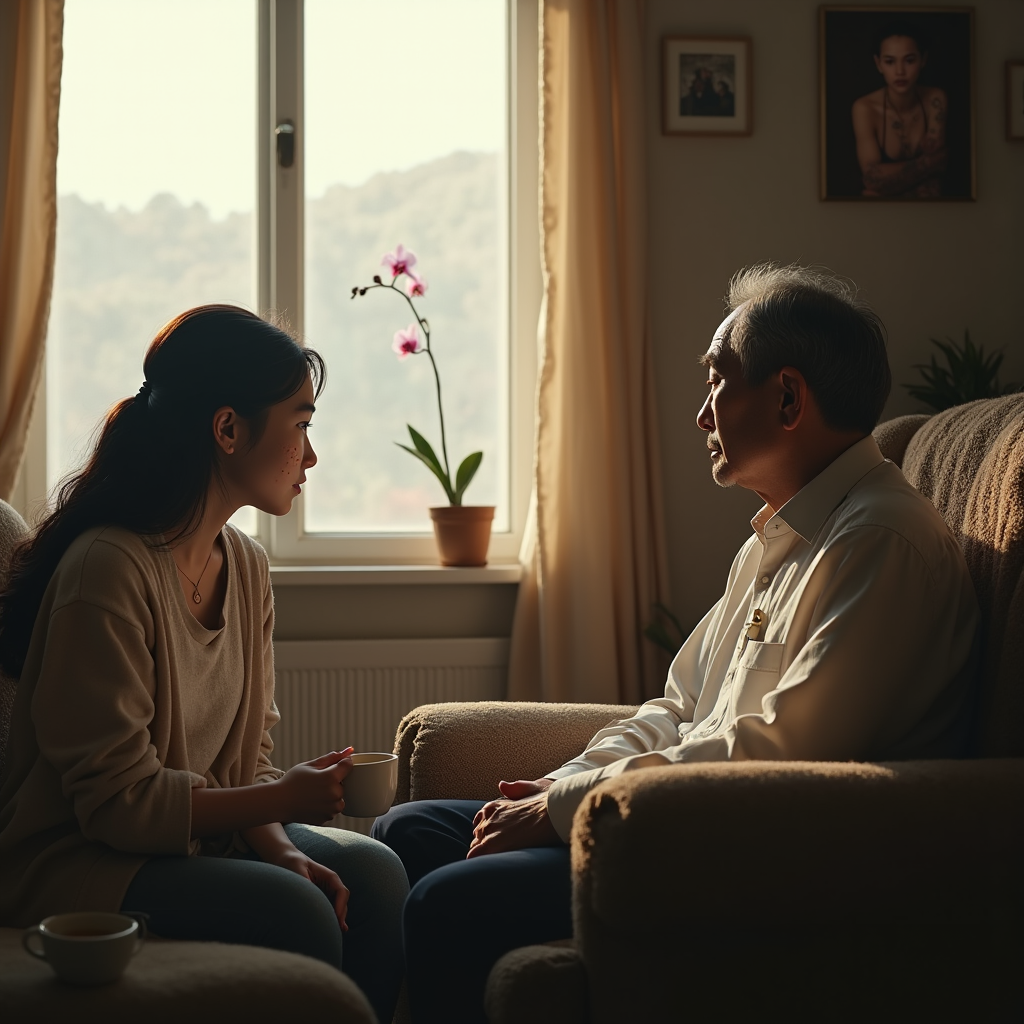
The chill settled deep in my bones before I even heard the news. It wasn’t a sudden drop in temperature, not exactly. More like a thickening of the air, a subtle shift in pressure that pressed against my chest, making it hard to breathe. Dad called late Saturday afternoon, his voice tight with something he couldn't quite articulate – grief, certainly, but underneath that, a raw, unsettling certainty. He told me Grandpa had taken another turn, another slide downward. The doctors were optimistic this time, talking about stabilization, about releasing him from the hospital soon. I could practically hear my mom’s forced cheerfulness echoing in his words, trying to build a wall of reassurance around the unspoken dread.
Then came *that* feeling. A prickling at the back of my neck, a sudden awareness that something was profoundly wrong – terribly, irrevocably wrong. It wasn't a logical deduction; there were no visible signs, no changes in his vital signs registered on the monitors. Just this insistent, internal knowledge, like a discordant note in a familiar melody. I pushed it down, of course. Rationality is a powerful defense mechanism against things you don’t understand, especially when someone you love is in pain. But the feeling persisted, intensifying with each tick of the clock, mirroring the growing unease within me.
The silence that followed my mother's call was thick and suffocating. It wasn’t just the absence of her voice, but a void where hope should have been. And then it happened. The phone rang again, this time with a different tone – flat, devoid of any warmth or explanation. That’s when I knew. It wasn't a coincidence, not really. It was the chilling confirmation of something already instinctively understood: Grandpa was gone.
It’s strange, isn’t it? How these moments can reshape our perception of time. Before that call, Saturday had seemed ordinary – the lingering Sunday morning, the remnants of pancakes, the half-finished book on the couch. Afterward, it felt as though an entire layer of reality had been peeled back, revealing a hidden current beneath everything we knew. The feeling wasn’t about predicting the future; it was about recognizing a predetermined endpoint already contained within his body.
I've read about this phenomenon, these unsettling “precognitive” sensations that plague some individuals. Government projects like Project Stargate, attempts to harness psychic abilities for intelligence gathering—they sound utterly absurd when you think about them. Yet the stories persist, whispered among those who’ve experienced something similar – a jarring awareness of an impending tragedy before it’s publicly announced. It feels less like magic and more like the brain trying to make sense of chaos, desperately attempting to find patterns where none exist.
The idea that our minds can somehow tap into information outside the constraints of linear time is deeply unsettling, isn't it? I keep returning to this notion that we aren’t simply passive recipients of events; we are active participants in their creation. It’s a disorienting thought—the implication that our thoughts, our anxieties, our very perceptions can contribute to shaping reality as we experience it. The world feels less like a stage and more like a collaborative artwork.
Think about the Simpsons – those countless episodes where events seemed to foreshadow real-world occurrences. Donald Trump’s presidency predicted before he even announced his candidacy! It’s tempting to dismiss these instances as mere coincidence, but what if they represent something far stranger? What if our collective consciousness, fueled by shared anxieties and hopes, is somehow capable of influencing the flow of time, of subtly altering the probabilities of events?
Ultimately, it's a humbling realization. The future isn’t some distant, unknowable entity waiting to be revealed. It's constantly being molded by us – our fears, our desires, our unconscious biases. And that terrifying truth—that we hold more influence than we realize—is what keeps me awake at night, wondering just how much of my own life I am unwittingly shaping.