
Understanding a Child’s Big Feelings
It’s hard, isn’t it? Watching a little person you love struggle to manage something as fundamental as *feeling*. I’ve seen it, recently, with my own child. I...

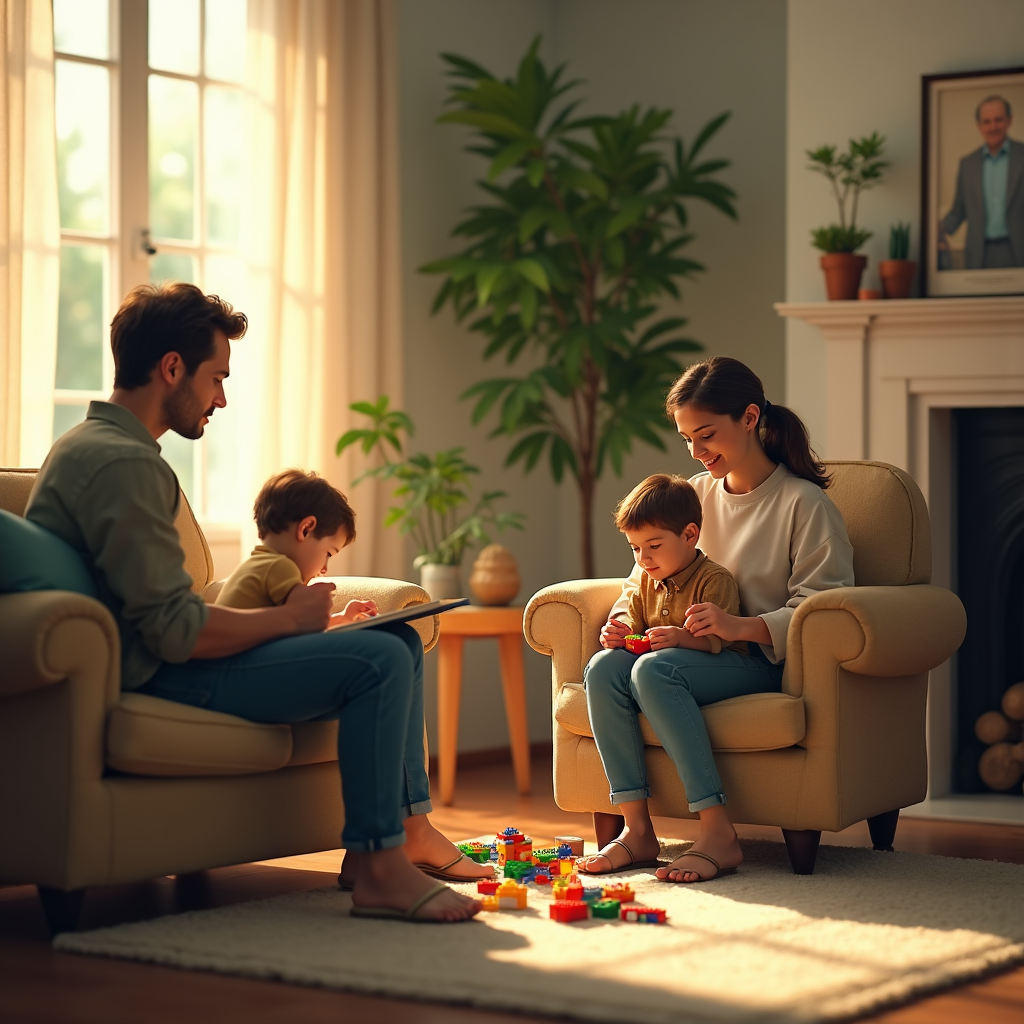
It’s hard, isn’t it? Watching a little person you love struggle to manage something as fundamental as *feeling*. I’ve seen it, recently, with my own child. It's not a new phenomenon, of course. I’ve been a pediatrician for a long time, and I’ve seen countless parents wrestling with tantrums, meltdowns, and the general chaos of childhood emotions. But seeing it in your own kid… that’s different. That’s a different kind of heartbreak.
I remember driving home from my dad’s place a few weeks ago – probably the fourth time that week I’d made the trip to Norwood – and my middle child, Leo, was having a full-blown, floor-crumpling frustration spiral because he couldn't get the Lego tower to stand up. He’s six. Six-year-olds *should* be able to deal with a toppled Lego tower. But he wasn't. He was screaming, red-faced, kicking his legs. My immediate impulse was to fix it. To build the tower myself and make everything okay. I caught myself, though. Because that wouldn’t be helping him at all.
The truth is, kids are still learning. Their brains are still developing, especially the part that handles those big, complicated feelings - the frontal lobe. It’s not fully online yet. My dad's stroke, thankfully minor as it was, reminded me sharply of how easily things can shift, how suddenly control can feel… precarious. It’s the same principle, really. A stroke affects a specific region of the brain and, even with recovery, impulse control, planning, and managing emotion are all affected. For a six-year-old, that frontal lobe is still wiring itself. It’s like they *know* they should be able to handle it, but the pathway just isn’t quite there yet.
There's a tendency, I think, especially for us as parents, to see these moments as personal failings. Either on their part or our own. *Why can’t they just calm down? Why can’t I handle this better?* It's a judgment, and it's rarely helpful. Lately, when I feel that familiar wave of parental frustration rising, I try to remember my dad and the precariousness of it all. It’s a slow process.
I’ve been thinking a lot about resilience lately. Not just in my dad – he’s proving to be remarkably resilient – but in my kids. Seeing them navigate the challenges of school, of friendships, of just *being* kids… it's a constant lesson in how to bounce back. That teacher called me about Leo last week. Some social dynamics are proving tricky. It's easy to feel helpless, to want to fix it all. But the fixes need to come from inside him, from a place of understanding his own reactions.
And that understanding takes time. It takes patience. It takes a whole lot of validation. Sometimes, just acknowledging the feeling – “I see you’re really frustrated, Leo” – can be enough to diffuse a situation. It’s not about condoning the behavior, it's about acknowledging the *feeling* behind it. Because those feelings are real, even if the reaction feels disproportionate. It’s an important lesson I've been relearning myself, watching my dad work through his recovery. There's a validity in acknowledging the effort, regardless of the outcome.
It’s also important to remember that every child is different. Some kids are naturally more even-keeled; others are wired to feel things more intensely. There’s no one-size-fits-all approach to parenting. What works for one child might backfire spectacularly with another. My oldest is a whirlwind of emotion, a tiny volcano. My youngest is quiet and observant, a little sponge soaking up the world around her. Trying to parent them with the same techniques would be a disaster.
The best thing we can do, I think, is to provide a safe and supportive environment where children can learn to explore and express their emotions in healthy ways. It's not about eliminating the tantrums or the meltdowns – those are part of being human. It’s about helping them develop the tools they need to navigate those moments with a little more grace, a little more understanding, and maybe, just maybe, a little less Lego-induced frustration. And most importantly, it’s about reminding them, over and over, that you're there, that you see them, and that you love them, even when they're kicking their legs and screaming about a tower of plastic bricks.