Witnessing: A Lesson at the Table
Certainty, they learned at the kitchen table, never arrives. You just pick up the paintbrush and see what happens. Sometimes what happens is brown. Solid, un...

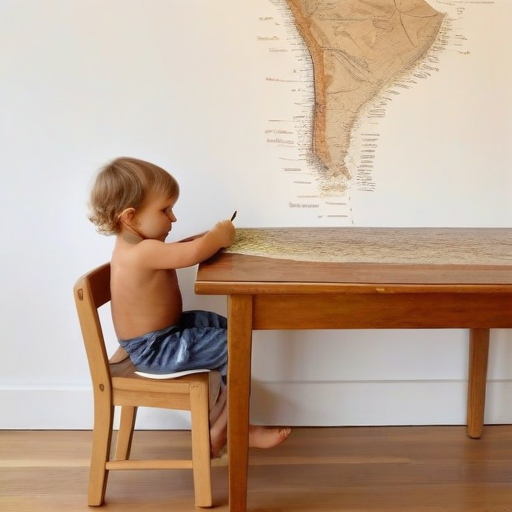
Certainty, they learned at the kitchen table, never arrives. You just pick up the paintbrush and see what happens.
Sometimes what happens is brown. Solid, unremarkable, mud-colored brown covering every inch of the page. And sometimes brown is exactly the right thing to make, because making it taught you that you could make something else tomorrow, and the day after that, and that the table would be there, and the paint would be there, and nobody in the room would need you to be perfect. They just needed you to sit down and begin.
I’ve spent a lot of time thinking about the quiet moments, the seemingly insignificant interactions that shape a child’s understanding of the world – and, frankly, their own self-worth. It’s the kind of thinking that comes from years of watching little hands smear paint, build towers of blocks that inevitably collapse, and wrestle with the sticky frustration of a failed craft project. These aren’t moments for grand pronouncements about resilience or the importance of embracing failure; they’re moments for something far more subtle, far more powerful. They're moments where the absence of judgment becomes a profound lesson.
The core of it, I believe, centers on the simple act of *witnessing*. Not necessarily praising, not necessarily correcting, simply *seeing* a child’s efforts, regardless of their outcome. As a pediatrician, I’ve encountered countless anxious parents obsessed with pushing their children toward peak performance—structured classes, rigorous tutoring, relentless schedules. But I've also realized that sometimes, the greatest support we can offer is to simply be present, to let our children explore, experiment, and yes, even make mistakes, without imposing our own expectations or anxieties.
The kitchen table, in my experience, serves as a remarkably effective microcosm of this principle. It’s a space where messiness is not just tolerated, but actively embraced. It’s where a child can build a wobbly tower, paint a chaotic mural, or construct a lopsided clay sculpture, knowing that there’s no expectation for it to be perfect. This isn't about celebrating the finished product—though a little appreciation is nice—it's about fostering a sense of experimentation, of playful exploration, of recognizing that the process itself holds value.
What I’ve noticed repeatedly, and it’s a pattern I’ve seen across generations, is that the most significant impact isn’t in the direct instruction or the specific outcome, but in the way a child learns to navigate that outcome. When a child makes a mistake—a smeared painting, a crumbling structure, a flawed creation—and there’s no immediate, critical reaction, that child learns something invaluable: that imperfection is survivable. It’s a lesson that, frankly, many of us never fully grasp until we’re confronted with our own anxieties about failure.
The tightness in the chest, the flush of heat, the urge to abandon a project—these are deeply ingrained responses, often rooted in the first audiences a child ever had. If a child’s drawing is met with a harsh critique, or if a parent sighs dramatically at a failed attempt, the child learns that making something visible means vulnerability to judgment. The result is a learned hesitation, a fear of exposure that can manifest in countless ways throughout life.
This isn't about minimizing the importance of feedback, but rather about understanding the context in which it’s delivered. The quiet, unburdened presence at the kitchen table—a parent simply sitting nearby, perhaps working on their own imperfect project, or just enjoying a cup of coffee—creates a safe space where a child can learn to tolerate imperfection, to embrace the inherent messiness of the creative process, and to understand that sometimes, the most valuable lesson isn't about achieving a perfect outcome, but about the courage to simply begin.