Goodbyes and Growing Up
Sometimes, when I’m staring at the little faces across the room, trying to keep track of who needs a pencil, who’s zoning out, and who’s about to launch a sp...

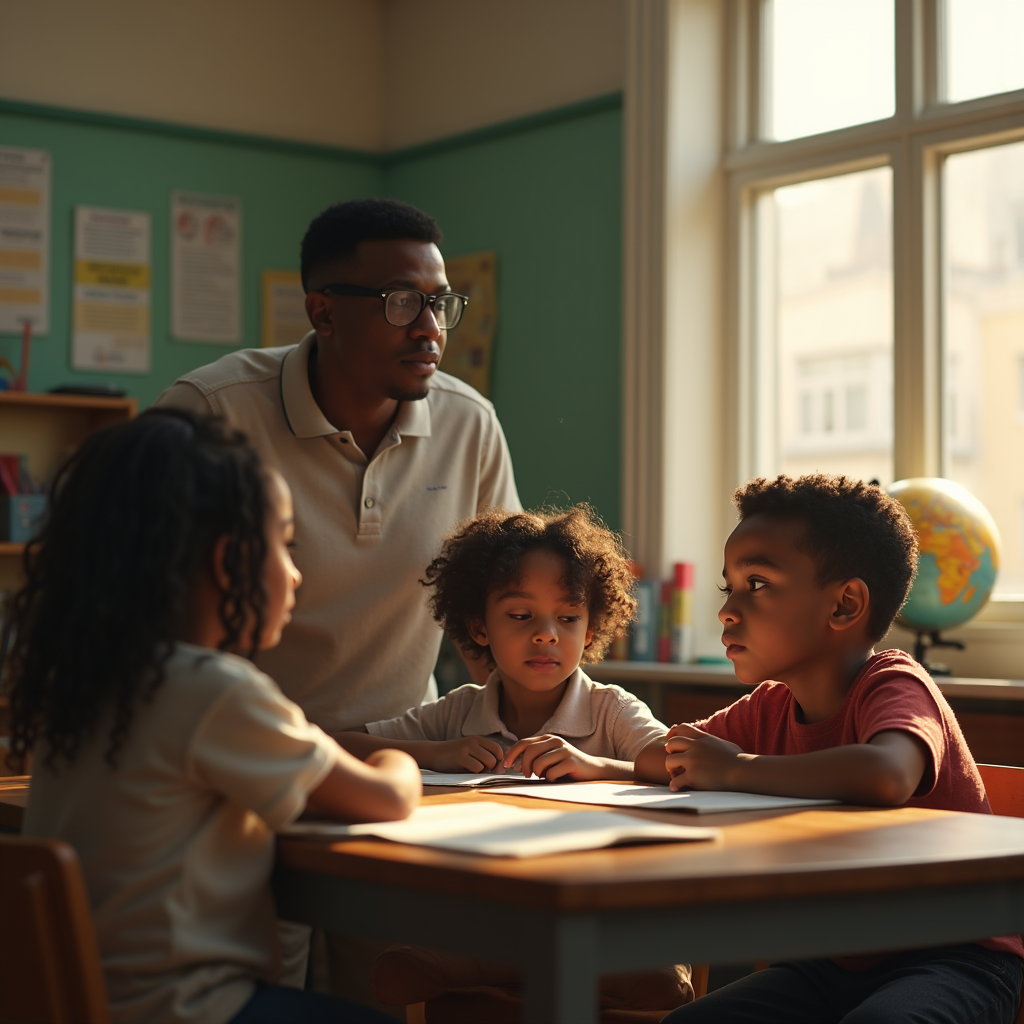
Sometimes, when I’m staring at the little faces across the room, trying to keep track of who needs a pencil, who’s zoning out, and who’s about to launch a spitball, I think about what it means to be settled. To have a yard, a routine, a sense of where you belong. Because for some of the kids in room 214, that feeling is a luxury. More kids than you'd think – nearly three percent of the student population nationwide – have a parent or caregiver connected to the military, and that means a whole different kind of life. A life full of goodbyes.
It’s not something you can really teach for. You can’t put “dealing with constant relocation” into the curriculum. You can’t grade a student on their ability to make friends in a new town every six months. And it hits you, unexpectedly, like when Malik started crying in the middle of reading group last week. He'd just told me about his dad being sent overseas again, a place Malik didn’t even know how to pronounce, and he just…broke. It wasn’t a loud, dramatic cry. Just silent, shuddering tears. It reminded me of the quiet sadness that settles in when you’ve lost something important, and you can’t quite name what it is.
I remember a kid back in South Jersey, Ben, who’d already moved three times before he was ten. Each move meant a new school, new teachers, new friends – or the heartbreaking realization that the friends he’d made wouldn’t be there next year. He’d built this whole wall around himself, this carefully constructed indifference, and it was impossible to get through. You tried, you really did, but the weight of all those goodbyes felt almost tangible. It’s a burden kids shouldn’t have to carry.
The thing about military families is that they’re also incredibly resilient. They have to be. They adapt. They bounce back. They learn to pack light, both literally and figuratively. You see it in the kids – this quickness, this ability to make connections and then let them go. It's impressive, honestly. But it’s also a kind of strength born out of necessity. It’s the kind of strength that can get masked as something else, a detachment, a seeming lack of investment. And that's what we, as teachers, need to be looking for.
It’s not just about the big deployments, either. It's the smaller things. The parent who misses soccer games because of training. The sibling who gets overlooked while the active-duty child receives extra attention. The constant worry about the parent’s safety. The quiet, persistent feeling of being different, of living a life that doesn’t quite fit the norm. It’s a strain that can affect a kid's focus, their motivation, their sense of self-worth. Like when Sarah couldn't concentrate on her math work because her mom was on a video call with a doctor about her dad's knee.
What I’ve realized, working here in West Philly, is that we need to be better at just *seeing* these kids. Not just as students, but as individuals carrying a unique weight. A simple check-in, a quiet conversation, offering a space for them to just *be* – those things matter more than any fancy program or curriculum. The school counselor here is doing some good work, connecting families with resources, but it feels like we need to build that support system organically, within the classroom itself.
One thing that’s made a difference, just a little bit, is making sure to acknowledge the sacrifices. Not in a grand, patriotic way, but in small, everyday moments. Acknowledging that a student might be feeling anxious because their dad is away, or that they might need a little extra time to adjust to a new environment. Just saying, “I see you, and I understand that things might be tough right now.” It’s a small thing, but it can be surprisingly powerful.
It’s a responsibility we all share, I think. Not just teachers, but administrators, support staff, the whole school community. Because these kids, they’re not just students. They're the children of those who serve, and they deserve to feel seen, supported, and connected, no matter how many times they have to say goodbye. Maybe, just maybe, if we can offer them that stability, that sense of belonging, we can help them carry that weight a little bit easier. And that's something worth working for, every single day in room 214.