The Weight of Unspoken Fears
Sometimes, it feels like I'm watching a play unfold right in front of me, a silent drama performed daily in my classroom. It’s not always obvious, but it's t...

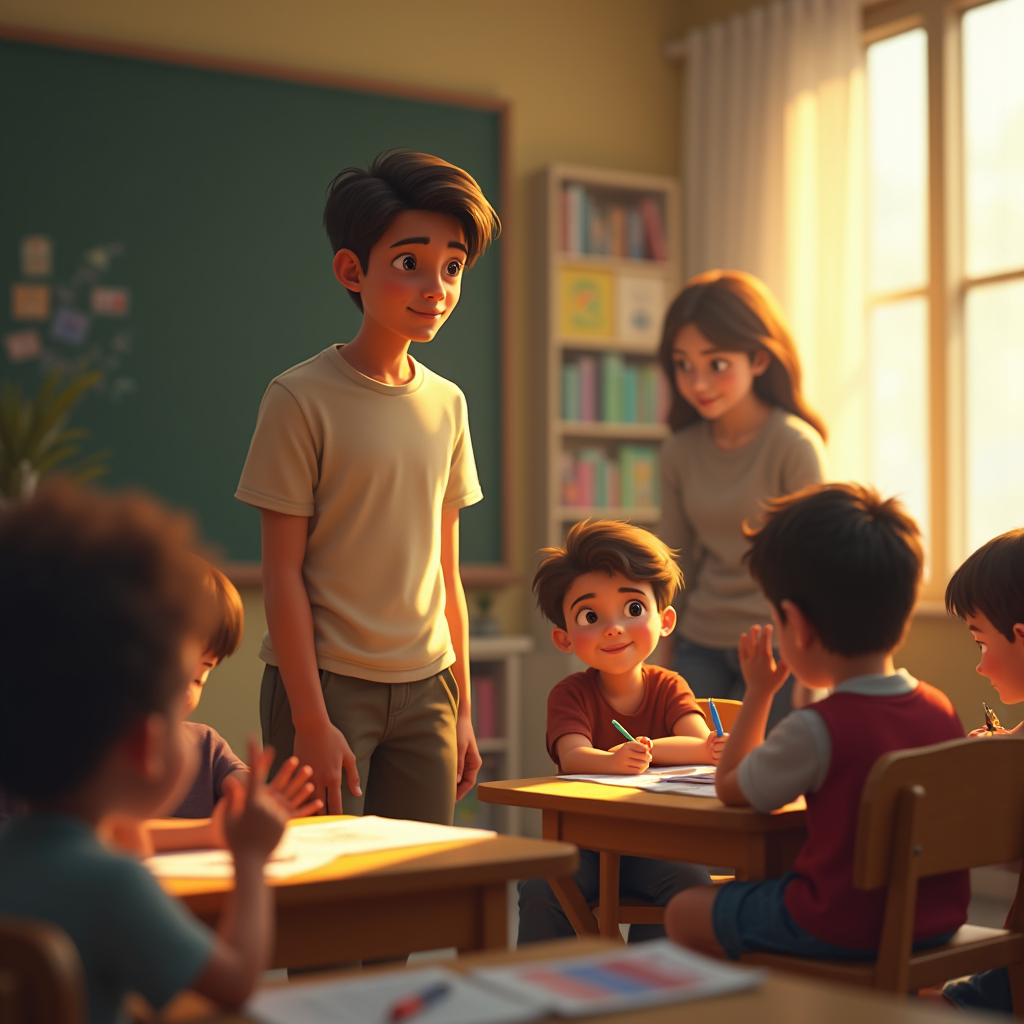
Sometimes, it feels like I'm watching a play unfold right in front of me, a silent drama performed daily in my classroom. It’s not always obvious, but it's there – the way a kid clutches their pencil a little too tight, the hesitation before raising their hand, the sudden quietness when a substitute teacher walks in. These aren't necessarily signs of sadness or unhappiness. They’re signs of…waiting. Waiting for something, for someone, to tell them it’s okay.
It started me thinking about my own mom, really. Not in a big, "aha!" moment, but in little bits and pieces. Like when I was little, she wouldn't let me ride my bike past a certain block, even though I was a pretty good rider. I didn't understand then, but now I see it – she was worried. She wasn’t trying to keep me safe in some grand, logical way. It was more about her own discomfort with the possibility of something bad happening. And that discomfort, that tiny fear, became a little cage around my own sense of freedom.
I remember one kid, Malik, last year. Sweetest kid you’d ever meet. Brilliant, too. But he wouldn't take risks. Not in reading, not in math, not even in recess games. If he thought he might fail, he just...wouldn't do it. I tried to encourage him, praised his effort, tried to make those "failure moments" okay. But I also noticed his mom hovering at pick-up, asking him if he'd "had a good day" in a way that felt like an interrogation. I’m guessing she didn't want him to struggle. She wanted him to be happy, to succeed, to avoid anything that might bruise his ego.
That’s the tricky part, isn't it? We all want our kids to be okay. We want to shield them from the world’s hurts. But sometimes, in trying to do that, we accidentally teach them that the world is something to be feared. I’ve seen it. A quick glance at a loud noise sends a shiver through a child, not because the noise was truly dangerous, but because their parent's reaction – the sharp intake of breath, the tight grip on their hand – communicated that it *was* something to be scared of. They're mirroring, like little emotional chameleons.
I think about South Jersey. My aunts and uncles, good people, always planning for the "what ifs." Extra insurance, extra security, extra everything. It wasn't about providing, it was about preventing. And I saw how that affected my cousins. They were polite, they were well-behaved, but they were also…guarded. There was a certain level of anxiety that seemed to hum just beneath the surface, a constant awareness of potential threats. It wasn't their fault. They just learned to see the world through the lens of their parents’ worries.
It’s not about blaming anyone. My mom, my aunts and uncles, they were just doing what they thought was best. They were trying to love us, to protect us. But love, sometimes, can be suffocating. It can look like a cage when it's meant to be a haven. And the kids in room 214? They deserve to explore, to make mistakes, to learn that failure isn’t the end of the world. They deserve to learn that uncertainty is just…part of being alive.
I’m trying to be more conscious of my own anxieties. I worry about whether I’m doing enough, whether I’m saying the right things, whether I’m making a difference. It’s a pressure I put on myself, and I’m trying to let some of it go. Because I know that if I'm carrying that weight, it's going to spill over. It's going to become another unspoken message for those kids to decode, another layer of fear to navigate.
Maybe the most important thing we can do as parents, as teachers, as anyone who cares about kids, is to simply *be* present. Not hovering, not judging, not correcting. Just being. Letting them see us breathe, see us laugh, see us stumble. Showing them, without words, that it’s okay to not have all the answers, that it’s okay to be a little scared, and that even when things are tough, we’ll be there to help them find their way. That’s what room 214 feels like sometimes – a place to find your way.